The palaces of the Bosphorus
From Topkapı on its point to the summer palace of Beylerbeyi: the Ottoman residences built to be seen from the water.
Published
In the 19th century the Ottoman court left the old palace on the hill and moved to the shore. The result is a string of palaces along the Bosphorus, each designed with its best face to the water.
Topkapı, where it began
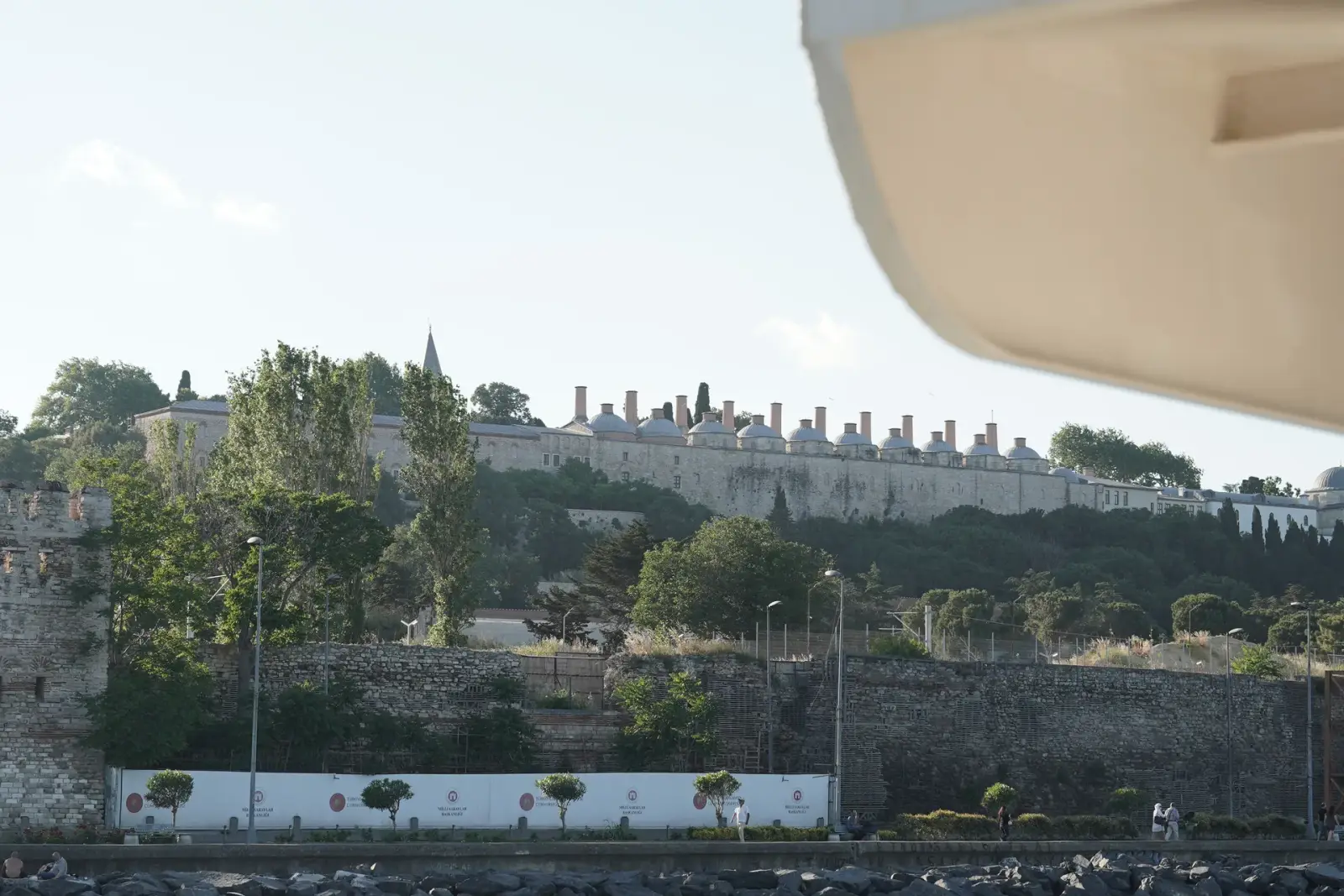
For nearly four centuries the sultans ruled from Topkapı, on the point where the Bosphorus meets the Golden Horn. From the sea you see its walls and pavilions along the hill — the first palace of every cruise.
Dolmabahçe and Çırağan
Dolmabahçe, built for Sultan Abdülmecid I and completed in 1856, became the new seat of the court. Its marble waterfront stretches along the European shore at Beşiktaş. Atatürk died here on 10 November 1938.
A little further north, Çırağan was built for Sultan Abdülaziz in 1863–1867. It burned in 1910 and was restored as a hotel in the 1990s.
Across the water: Beylerbeyi and Küçüksu
On the Asian shore, Beylerbeyi Palace was built for Abdülaziz in 1861–1865 as a summer residence and a house for royal guests; Empress Eugénie of France stayed there in 1869.
Further north, the Küçüksu Pavilion, completed in 1857, is a small jewel of a building used for short excursions — a museum since 1944.
A family of architects
Most of these buildings — Dolmabahçe, Çırağan, Beylerbeyi, Küçüksu and the Ortaköy Mosque — were designed by members of one family, the Balyans. Seen one after another from a boat, they read almost as a single work.