Skip to content

Bosphorus guide

What you see from the water

The landmarks a Bosphorus cruise passes, grouped by shore. Dates are when each was built; whether it can be visited, and when, is decided by those who run it.

European shore

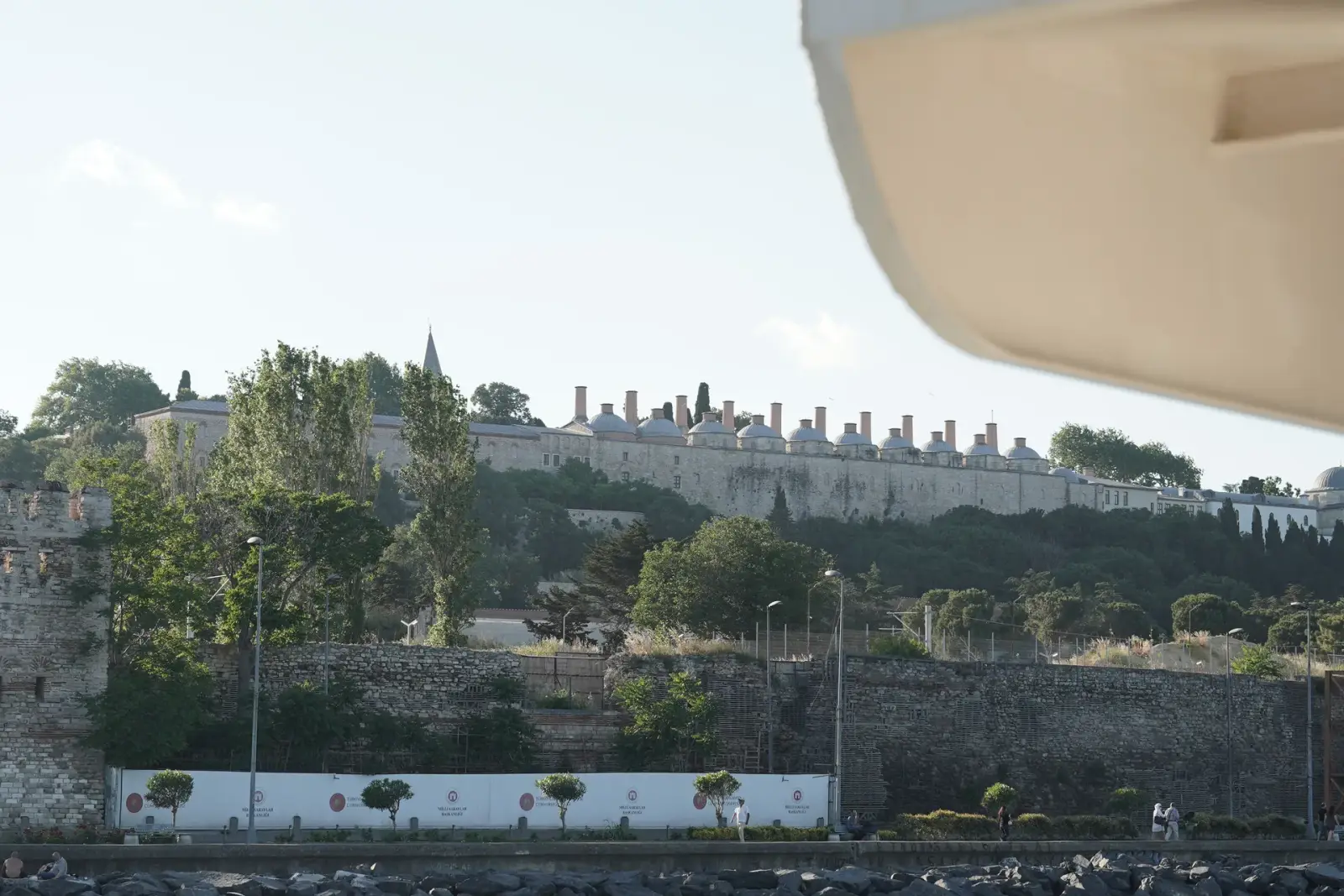
Topkapı Palace above its sea walls, seen from the deck

Topkapı Palace

Sarayburnu · the Ottoman court for nearly four centuries

On the point where the Golden Horn meets the Bosphorus, Topkapı was the seat of the Ottoman sultans from the 15th century until the court moved up the shore to Dolmabahçe in the 19th.

From the water you see what the sultans saw from their terraces: the meeting of three waters and the Asian shore opposite.
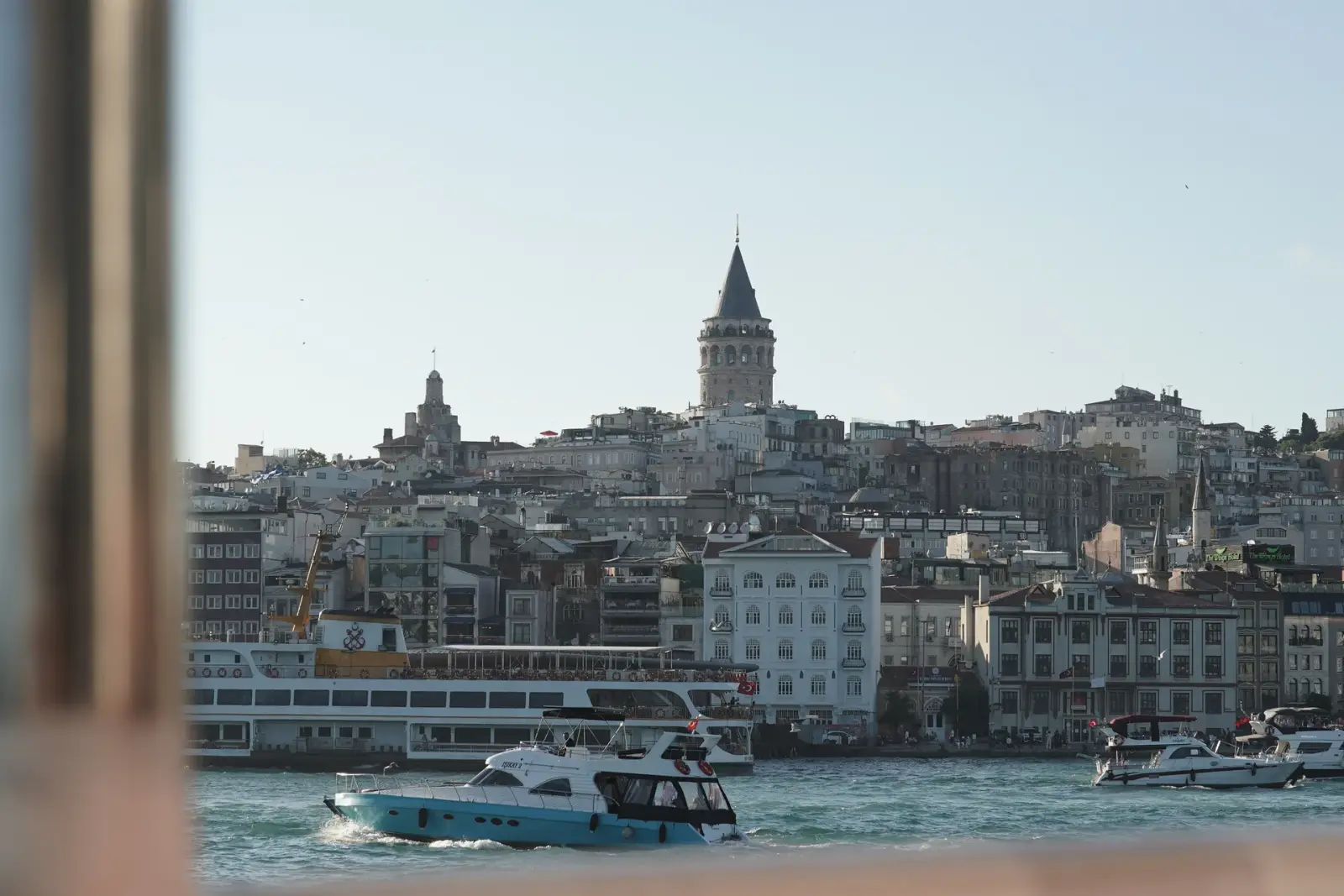
Galata Tower rising above the rooftops of Karaköy, seen from the boat

Galata Tower

Galata · built in 1348

Built by the Genoese of Galata in 1348, the round stone tower has watched over the mouth of the Golden Horn ever since. It is now a museum with a viewing gallery near the top.

Dolmabahçe Palace

Beşiktaş · 1843–1856

Built for Sultan Abdülmecid I by the Balyan family of architects, Dolmabahçe replaced Topkapı as the main residence of the sultans when it was completed in 1856. Its long marble façade was designed to be seen from the sea.

Mustafa Kemal Atatürk, founder of the Turkish Republic, died here on 10 November 1938.

Çırağan Palace

Beşiktaş · 1863–1867

Built for Sultan Abdülaziz, Çırağan burned in 1910 and stood as a shell for decades. Restored, it reopened in the 1990s as a hotel; from the water it looks much as it did in the 1870s.

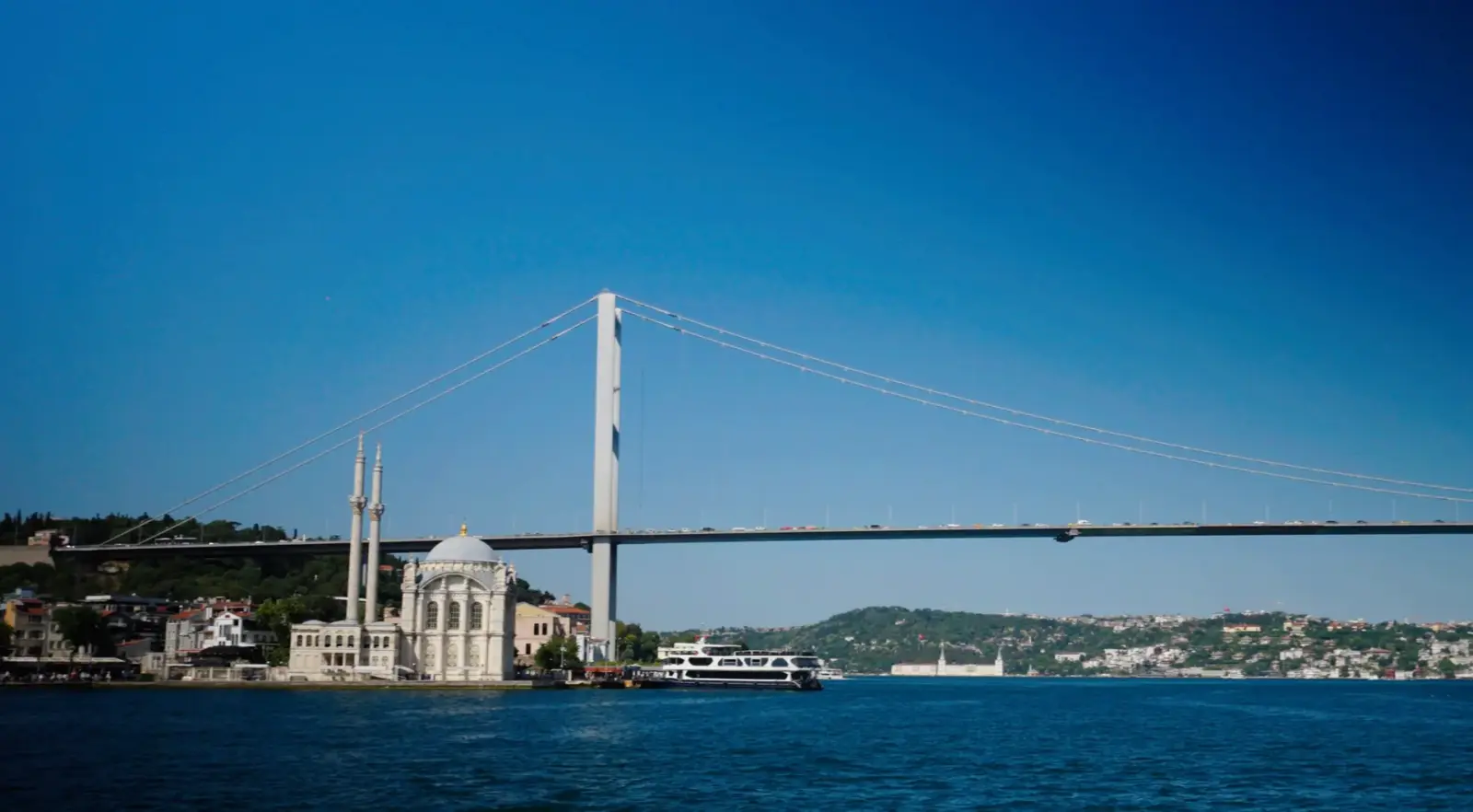
Ortaköy Mosque on the waterfront beneath the 15 July Martyrs Bridge

Ortaköy Mosque

Ortaköy · completed in the mid-1850s

Officially the Büyük Mecidiye Mosque, it was built for Sultan Abdülmecid I by the Balyans and completed around 1854–1856. Standing right at the water’s edge beneath the first Bosphorus bridge, it is the strait’s most photographed view.

Rumeli Hisarı

Sarıyer · built in 1452

Sultan Mehmed II raised this fortress in 1452, the year before the conquest of Constantinople, to control the narrowest stretch of the strait. Its walls climb the hillside from the water; it has been a museum since 1960.

On the water

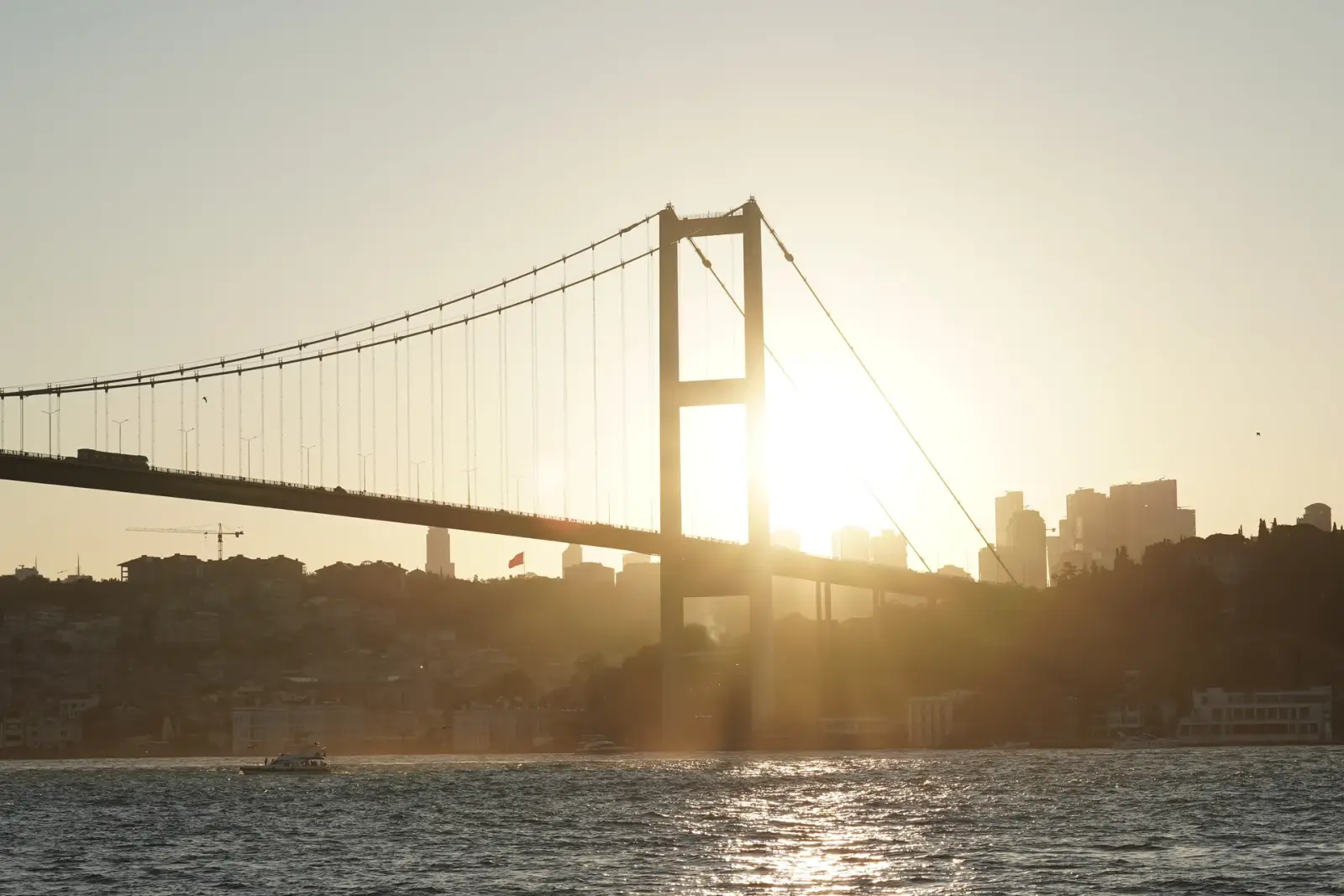
The 15 July Martyrs Bridge against the low sun, seen from the boat

15 July Martyrs Bridge

Ortaköy – Beylerbeyi · opened in 1973

The first bridge between the two continents, opened on 30 October 1973 with a main span of 1,074 metres. Long known as the Bosphorus Bridge, it was renamed in 2016.

Fatih Sultan Mehmet Bridge

Rumeli Hisarı – Kavacık · opened in 1988

The second Bosphorus bridge crosses just north of the two fortresses. It is named after Mehmed II, whose fortress stands at its European end.

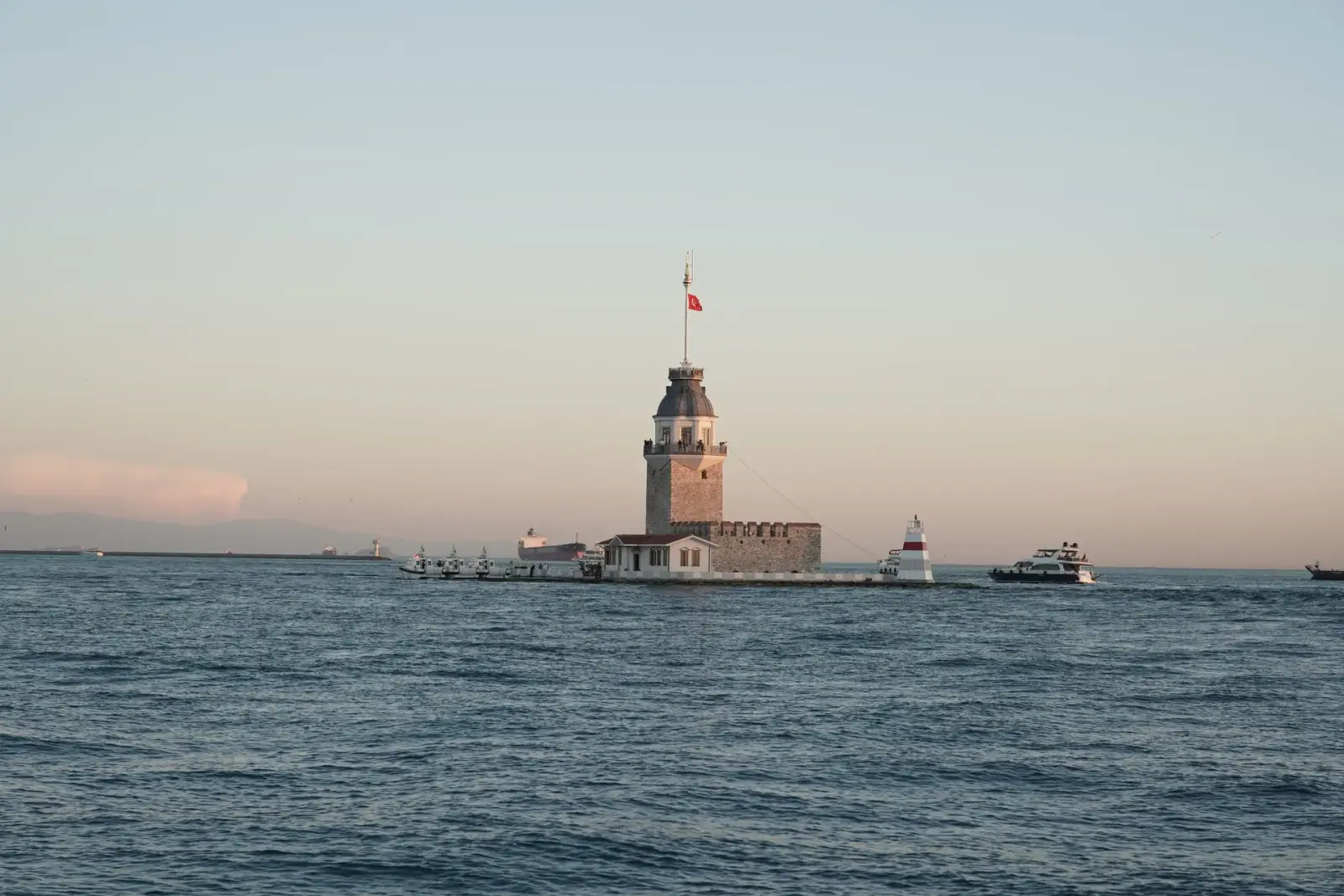
The Maiden’s Tower in the evening light

Maiden’s Tower

Off Üsküdar · rebuilt in stone in 1763

A tower on a tiny islet about 200 metres off Üsküdar, at the southern entrance of the strait. It has been a watchtower, a lighthouse and a café; after restoration it reopened to visitors in May 2023.

Asian shore

Anadolu Hisarı

Beykoz · built 1393–1394

The older of the two fortresses, built for Sultan Bayezid I on the Asian shore at the mouth of the Göksu stream. With Rumeli Hisarı opposite, it closed the strait in 1453.

Küçüksu Pavilion

Beykoz · completed in 1857

A small, lavishly decorated waterside pavilion built for Sultan Abdülmecid I by the Balyans, used for short stays and excursions. It has been a museum since 1944.

Beylerbeyi Palace

Beylerbeyi · 1861–1865

The summer palace of Sultan Abdülaziz on the Asian shore, later used to receive visiting royalty — Empress Eugénie of France stayed here in 1869 on her way to the opening of the Suez Canal.

See them for yourself

Every landmark on this page can be seen from the deck of the Bosphorus sightseeing cruise.

Bosphorus sightseeing cruise

About two hours from Ahırkapı Pier, up the European shore and back along the Asian side.

Dates and tickets

Bosphorus dinner cruise

The same strait at night, with dinner on board.

About the dinner cruise

Booked on our sister site, bosphorustour.org.