The Bosphorus explained: a strait between two seas
How long it is, how narrow it gets, why its water flows two ways at once — and why the world’s ships pass through the middle of Istanbul.
Published
The Bosphorus is a narrow strait that links the Black Sea to the Sea of Marmara — and, through the Dardanelles, to the Mediterranean. Istanbul grew up on both its banks.
Long and narrow
From end to end the strait is about 31 kilometres long. It is widest near its northern end, at around 3.4 kilometres, and narrowest at about 700 metres, between Kandilli on the Asian shore and Aşiyan on the European — the stretch guarded by the two fortresses.
Water flowing two ways
The Bosphorus has two currents at once. On the surface, fresher water from the Black Sea flows south towards the Marmara; deeper down, saltier water flows north. It is the surface current that a boat feels, and that a captain steers against.
A highway for the world’s ships
The strait is one of the busiest waterways in the world, and merchant ships pass through the middle of the city day and night. Passage is governed by the Montreux Convention, signed in 1936. On a cruise you will often share the water with tankers, ferries and fishing boats.
Gulls, dolphins and fishermen
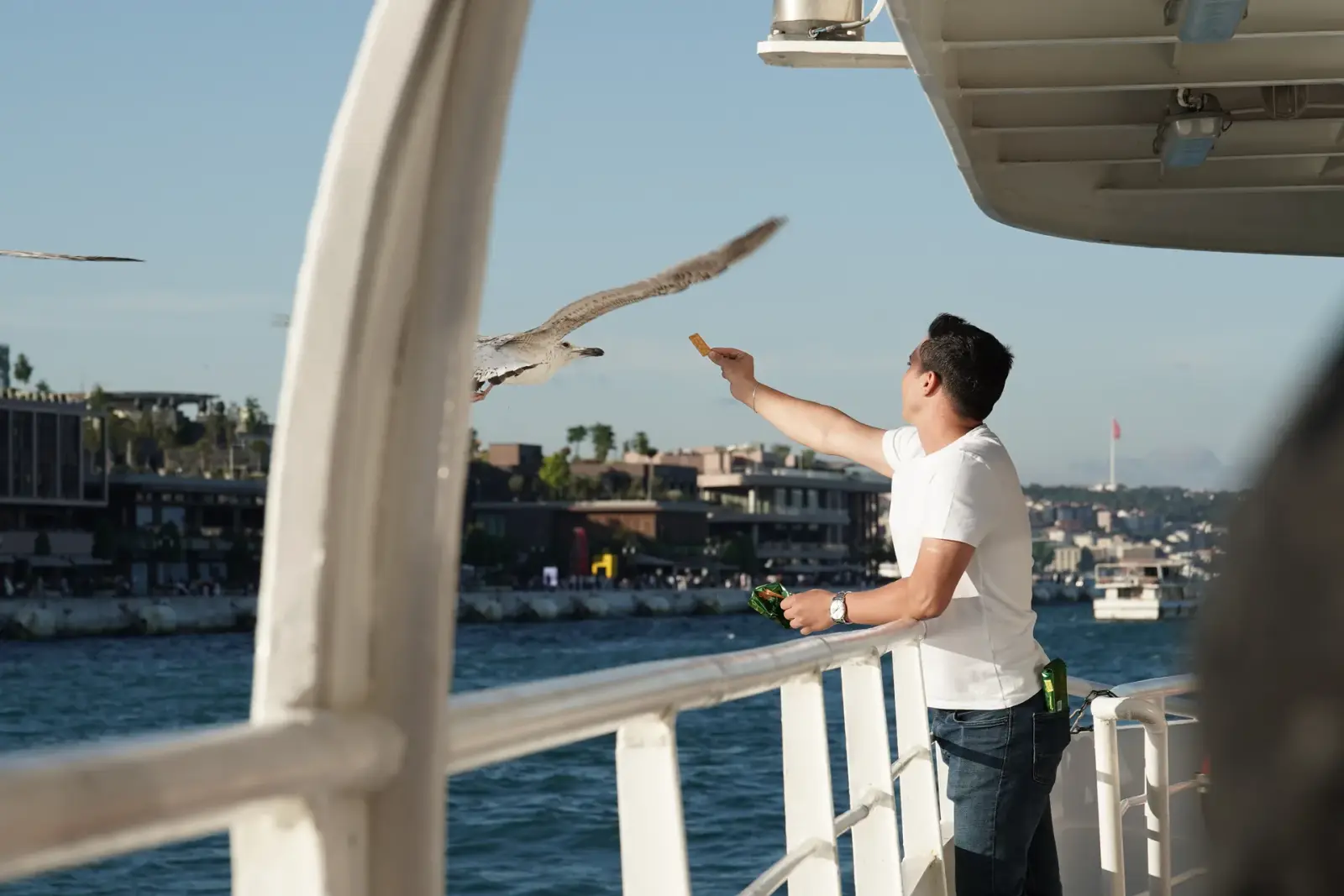
Gulls follow almost every boat, and anglers line the Galata Bridge and the quays. With luck, you may even see dolphins in the strait.